Around the 1500s, Venice was a city where vice and gambling were widespread, along with homosexuality, which was increasingly common among the population.
It’s worth noting that in the 1500s, more than 20,000 prostitutes were registered in Venice — known as “carampane” (named after the district where they worked), and they practiced their profession legally.
The carampane were subject to very strict rules imposed by the Republic. They had to be easily recognized by wearing a yellow scarf when walking around the city. There were even certain areas of the city where they were not allowed to pass — for example, the Grand Canal.
At the same time, Venice was the largest port in the Mediterranean, with thousands of people arriving daily by sea and land.
Some historians say that the rampant vice in the city during that period led men to increasingly prefer transgression with the same sex rather than with women.
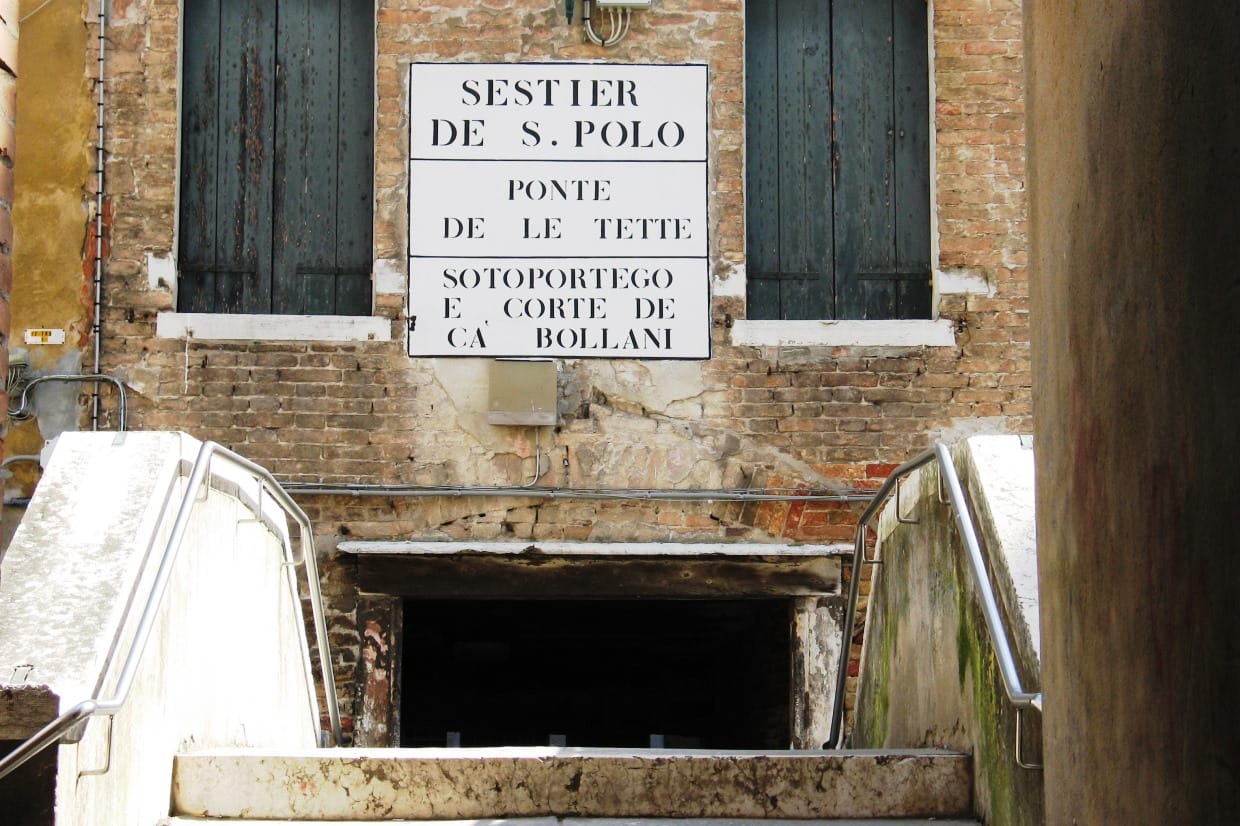
A crisis began, and the prostitutes started to complain about the lack of work. As a result, the government of the Republic ordered them to appear at the windows, facing the bridge between the districts of San Polo and Santa Croce, and to “put their breasts on display”, in order to attract passersby back to the opposite sex — and, in theory, to help ensure reproductive activity between men and women.
Even today, the “Ponte delle Tette” (Bridge of Tits) still exists — a reminder of the area that at that time had become a true red-light district. According to other historians, the prostitutes would bare their breasts at the windows purely to attract clients.
The Church of San Giacometto in Rialto is the oldest church in Venice, dating back to 421 AD: two outlines — one of an oyster and one of a fish — representing the minimum sizes allowed for sale at the market.