
Venice isn’t just beauty — it’s ingenuity, history, and mystery. Do you know why it was built on water?
What the colorful poles in front of gondolas mean? Or how its buildings have stood for centuries?
In this section, you’ll find fun facts and stories that make the world’s most incredible city truly one of a kind.
The Birth of Venice: A Tale of Grandeur and Wonder
Venice — known as the “Most Serene Republic” or “Queen of the Adriatic” — has captivated visitors from around the world for centuries with its timeless beauty and unmatched charm. But when, and why, was this fascinating city built atop the waters of the Venetian Lagoon?
Legendary Origins
The origins of Venice are wrapped in mystery and legend. It is said that the city was born in the 8th century, when people from the mainland sought refuge on the lagoon’s islands to escape the barbarian invasions ravaging northern Italy. According to tradition, the first settlement was founded in 421 AD, though it’s likely that communities existed there several centuries earlier.
The Founder: Islands and Marshes
Venice was established on an archipelago of small islands scattered among the marshes of the Venetian Lagoon.
The early settlers built wooden stilts, and later drove thick wooden poles deep into the marshy ground to create a solid foundation for their homes and daily life.
This unique environment offered natural protection against invaders and allowed its inhabitants to develop a civilization rooted in trade and seafaring.


The Divine Intervention of Saint Mark
According to legend, Venice’s destiny was sealed by the divine intervention of Saint Mark. In 828 AD, two Venetian merchants smuggled the body of the Evangelist from the city of Alexandria in Egypt and brought it to Venice, hidden beneath loads of pork meat to evade Muslim inspections.
Until the 12th century, the city’s patron saint was Saint Theodore, but with the arrival of Saint Mark’s relics — and the growing political and religious significance of his figure — he was gradually replaced.
From that moment on, Saint Mark became the spiritual and symbolic guardian of Venice, and the basilica bearing his name, located in the square of the same name, became the ultimate emblem of the city’s power and wealth.
The Flourishing Medieval Period
Venice flourished during the Middle Ages, becoming an unmatched maritime and commercial power. Thanks to its strategic position between Europe and the East, the city became a major hub for trade and culture, accumulating wealth and influence that made it one of the most powerful and influential cities in the world.
Venice is an upside-down forest!
This is the very first thing you need to know before entering the city — and it will help you make sense of many “whys.”
Venice was built on a swamp. But how is it possible that its buildings are still standing after centuries?
Because Venice is, quite literally, one giant stilt city.
If you could flip the city upside down, you’d see millions of wooden poles, like a forest made of tree trunks without branches. This is what makes Venice truly unique: it was actually built on stilts.
Just imagine — to build the Rialto Bridge alone, 11,000 wooden poles were planted!
Pine, oak, or larch poles were driven up to 7.5 meters deep into the muddy ground known as caranto. Placed tightly next to one another, the tops were leveled and covered with one or two layers of thick wooden planks. On this wooden platform, stone foundations were then laid to support the buildings.
These poles remain embedded in the caranto in a completely oxygen-free environment. That’s what has allowed them to undergo a mineralization process, preserving them perfectly for centuries — to this very day.

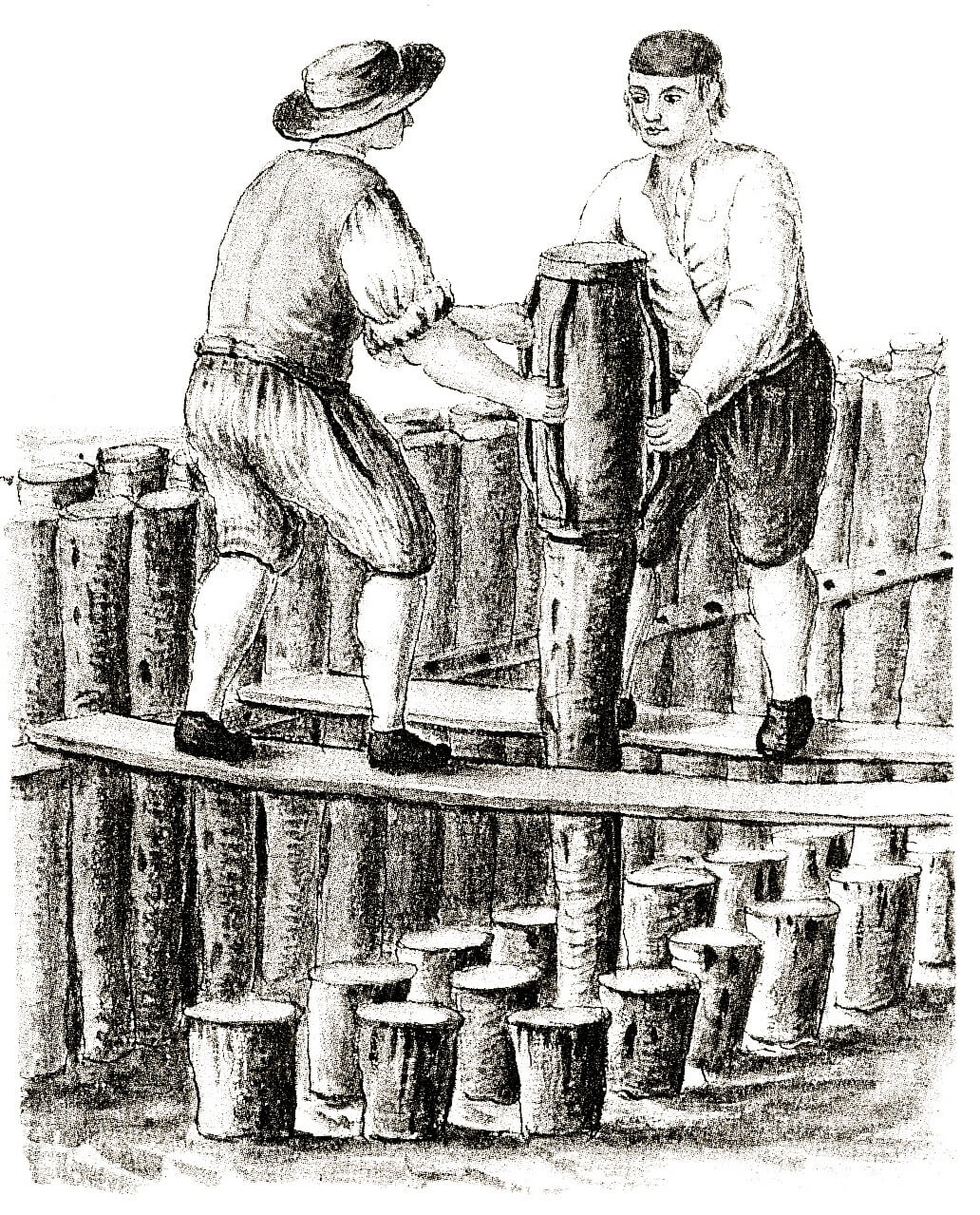
It sounds impossible, doesn’t it?
And yet, the entire city of Venice stands on wooden piles. So when you see a building that leans slightly, it’s likely that part of the foundation has given way under its weight.
In a sense… Venice is floating.
At water level, the construction of the actual home would begin. If you look closely, you’ll notice a white stone right at the waterline. That’s Istrian Stone (Pietra d’Istria) — placed between the foundations and the living space to prevent moisture from rising up through the walls.
The city was built on over 100 islands, all connected by more than 400 bridges.
This is the very first thing to know about Venice. Now you’re ready to enter.
But be careful — walk lightly, as if you were walking across a rooftop made of old tiles…
In the past, gondolas were also used as light combat vessels, and it’s believed that the iron prow was once used to ram enemy boats.
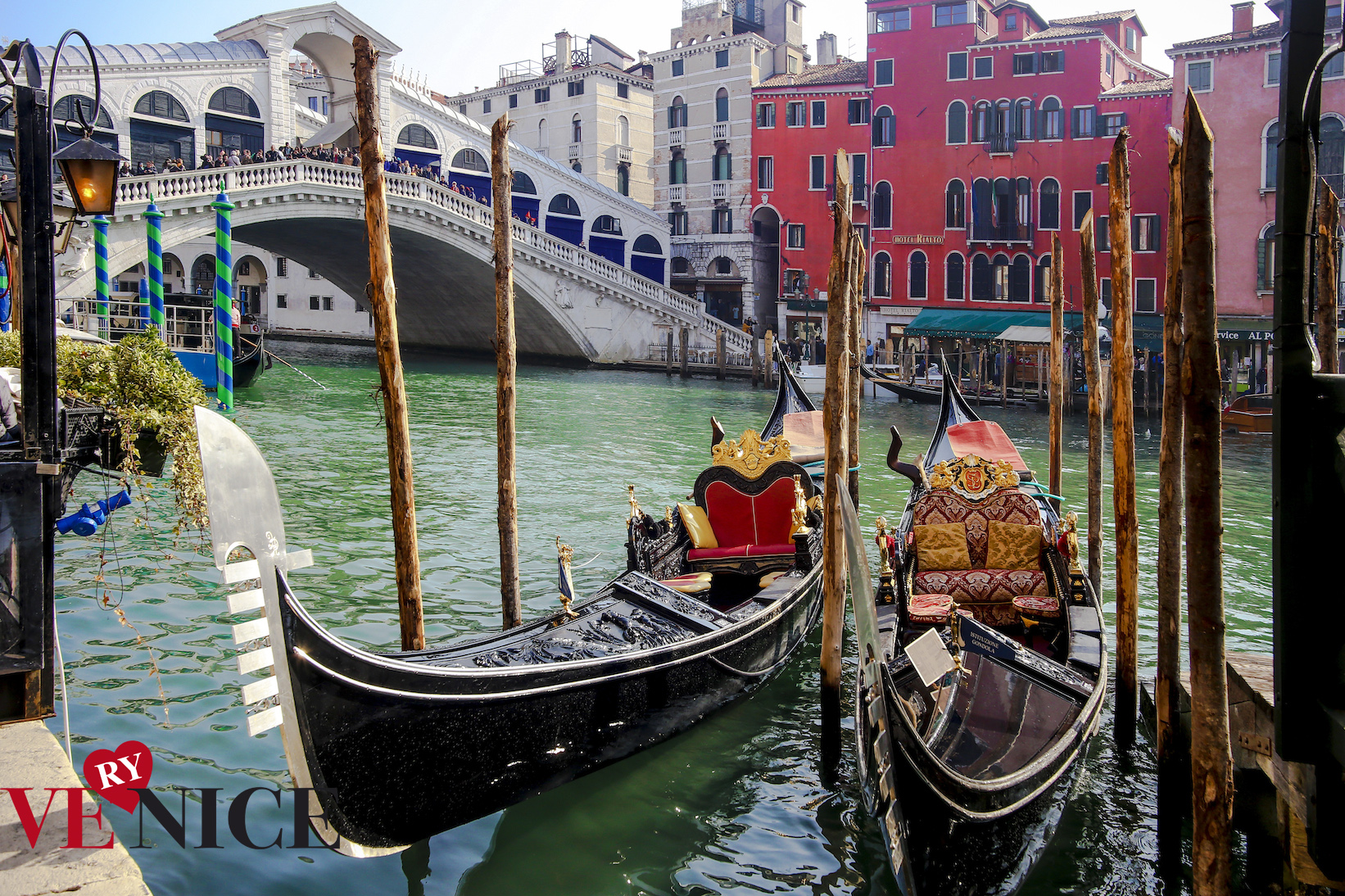
One of the most iconic and recurring symbols you’ll see as you wander through Venice is the gondola’s comb — that strange-shaped piece of iron at the front of every gondola.
The Gondola’s Comb: A Symbol of Tradition and Functionality in Venice
When you think of the Venetian gondola, one of its most distinctive features is undoubtedly the “comb” mounted at its prow.
This unique shape isn’t just decorative — it carries with it centuries of history and a practical purpose.
Let’s discover why the gondola’s comb looks the way it does, and what it truly represents.
1. Ancient History
The gondola’s comb has ancient origins, dating back to the earliest days of Venice. The first gondolas were made entirely of wood, and the comb was originally designed to protect the bow of the boat, preventing damage during docking and navigation in the narrow canals.
2. Symbolism and Decoration
Beyond its practical purpose, the gondola’s comb has, over the centuries, become a symbol of Venetian tradition and identity. Its intricate and decorative shape — often hand-carved and painted — adds a touch of beauty and majesty to the boat, reflecting the art and craftsmanship that have always been integral to Venetian culture.
3. Aerodynamic Function
Today, despite modern materials and advanced construction techniques, the comb still serves an important aerodynamic function. Its slanted, elongated form helps improve the gondola’s maneuverability, allowing the gondolier to push forward with ease and precision, reducing water resistance and increasing speed.
4. Cultural Heritage
In conclusion, the gondola’s comb is not only an iconic feature of Venetian boats, but also a symbol of the city’s rich cultural and artistic heritage. Its shape and design are the result of centuries of tradition and masterful craftsmanship — and they continue to inspire awe and admiration among Venice’s many visitors.
The gondola’s comb holds important information about the city.
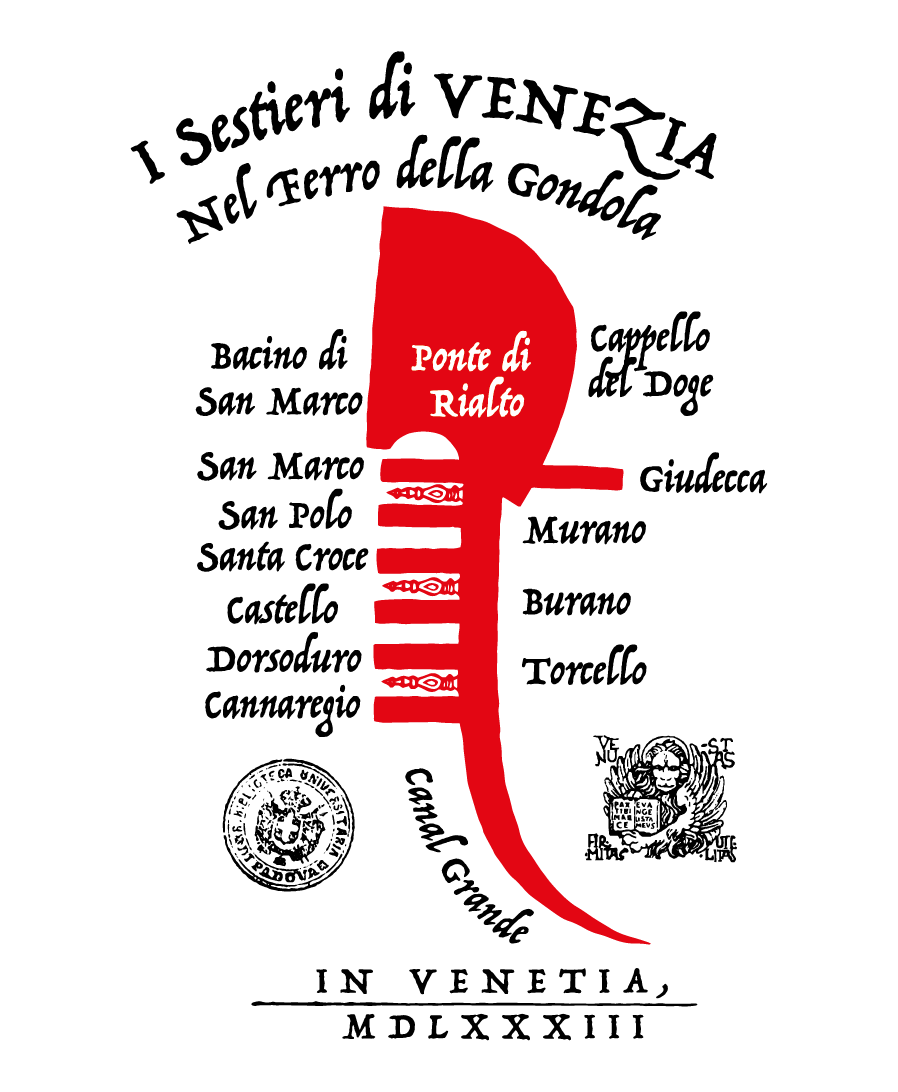
It starts with the six teeth on the left, which represent Venice’s six sestieri (the city’s districts, similar to neighborhoods in other cities): Cannaregio, San Polo, Santa Croce, San Marco, Castello, and Dorsoduro.
Inside the six main teeth, the three small decorations represent the three major islands: Murano, Burano, and Torcello, while the single tooth on the right side represents the island of Giudecca.
The top part of the comb represents the distinctive hat of the Doge, Venice’s historical leader.
The arch between the Doge’s hat and the first of the six teeth symbolizes the Rialto Bridge.
Lastly, the S-shaped curve that runs from the highest point down to the water represents the Grand Canal (Canal Grande).